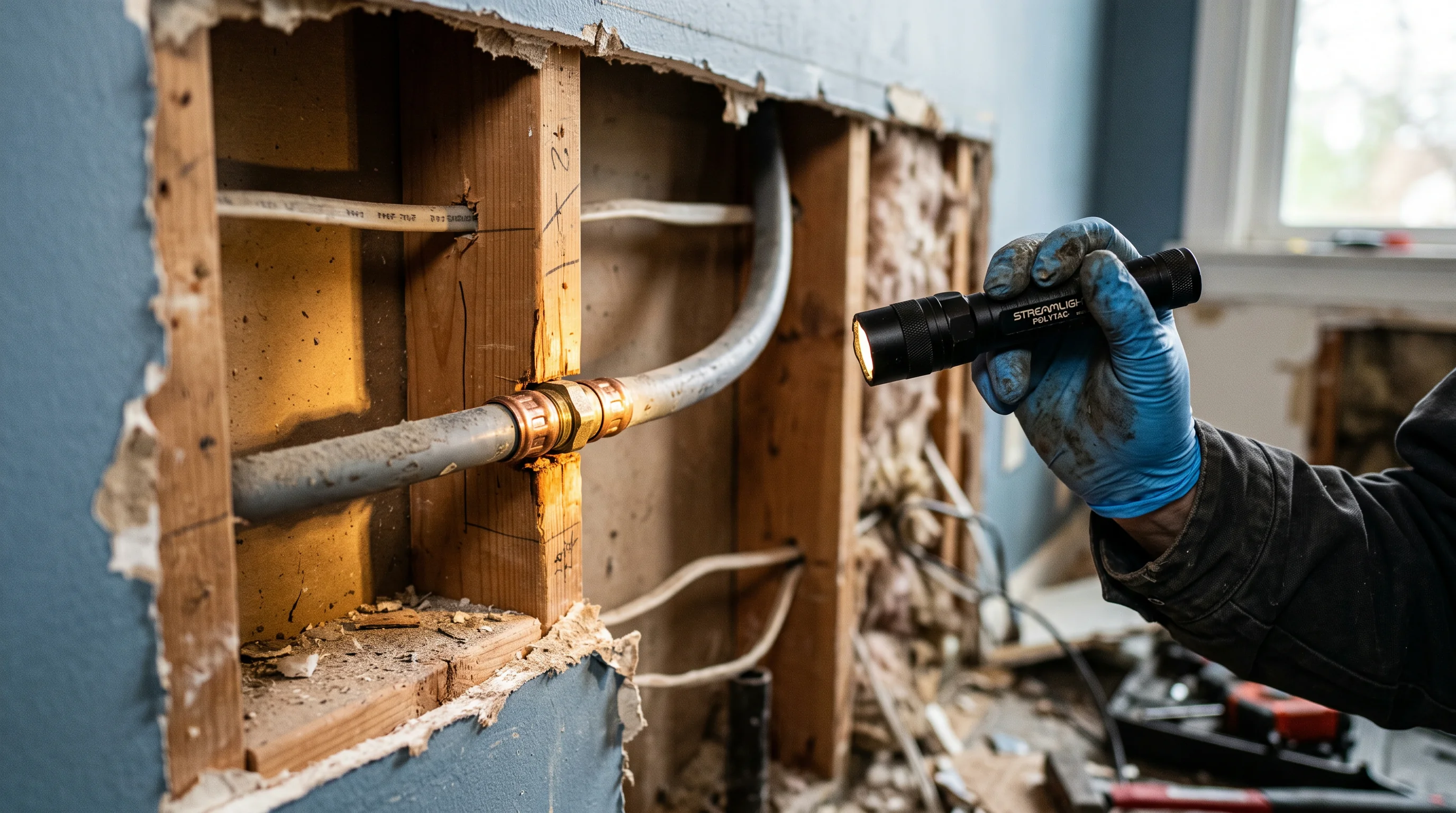
If an insurance company, a 4-point inspector, or a home inspector recently told you that your Tamarac or Broward County home has “poly pipe,” you probably left that conversation with more questions than answers. Is this a real emergency, or something you can put off for a year or two? Does it actually affect your insurance, or is someone just trying to sell you a repipe you don’t need? And if you do need to replace it, what does that actually involve?
This guide answers all three questions honestly. Polybutylene pipe — the gray plastic supply line installed in millions of U.S. homes, including a large share of the 1970s-to-1990s housing stock across Tamarac, Sunrise, Plantation, and the rest of Broward County — is not a defect you can ignore indefinitely. It has a documented history of sudden, catastrophic failure, it is a well-established reason Florida insurers decline or cancel coverage, and by 2026 every home that could still have it is old enough to be well past the narrow exceptions some carriers still allow.
We’ll walk through what the pipe actually is and why it fails, how to identify it in your own home, why insurers treat it the way they do, and what a whole-house repipe looks like from start to finish.
What Polybutylene Actually Is — and Why It Fails
Polybutylene (often shortened to “poly” or stamped “PB2110” on the pipe itself) was marketed from the late 1970s through the mid-1990s as a cheaper, faster-to-install alternative to copper. Builders liked it because it was flexible, required fewer joints, and cut labor costs. Homeowners were told it would last as long as copper. It didn’t.
The problem is chemical, not mechanical. Chlorine and chloramines — both standard disinfectants in U.S. municipal water supplies, including South Florida’s — react with the polybutylene resin over time. The reaction causes the interior of the pipe to oxidize, scale, and develop micro-fractures from the inside out. This is what makes polybutylene genuinely dangerous compared to a pipe that simply corrodes at a visible, gradual rate: a section of poly pipe can look completely normal on the outside for years while it quietly weakens on the inside, and then fail suddenly and without warning under normal water pressure.
The scale of the problem became undeniable by the early 1990s, when a wave of homeowner complaints led to Cox v. Shell Oil Co., a class-action lawsuit filed in 1993 against the manufacturers of polybutylene pipe and fittings. The case settled in 1995 for a reported $950 million to over $1.1 billion, one of the largest product liability settlements of its kind at the time, and it funded the replumbing of more than 320,000 homes at no cost to the homeowners. Shell Chemical stopped producing the resin for plumbing applications the same year, and polybutylene was effectively removed from U.S. building codes shortly after — not through a formal nationwide ban, but because manufacturers stopped making it and code bodies stopped approving it.
Polybutylene doesn’t fail gradually the way a slow drip does. Because the deterioration happens inside the pipe wall, a section that has been silently weakening for two decades can rupture in a single moment — often behind a wall or under a slab, while you’re at work or asleep. If you know your home has polybutylene, the question is not whether it will eventually fail, it’s whether you replace it on your schedule or find out about it from a flooded living room.
How to Tell If Your Home Has Polybutylene Pipes
You don’t need to open a wall to get a good idea of whether your home is a candidate. Start with the age: if your Tamarac, Sunrise, Plantation, Coral Springs, or Fort Lauderdale home was built — or replumbed — between 1978 and 1995, polybutylene is a realistic possibility. After that, look for the pipe itself in places where it’s exposed without demolition:
- At the water heater. Supply lines entering and leaving the water heater are often visible and unfinished.
- Under sinks and at hose bibs. Flexible gray, and sometimes blue, black, or off-white, plastic pipe about ½ to 1 inch in diameter.
- At the main shutoff valve near the water meter or where the main line enters the house.
- In the garage, attic, or utility closet where supply lines are frequently left exposed.
- Printed markings. Genuine polybutylene pipe is often stamped “PB2110” along its length, and fittings are typically copper or plastic crimp connectors with a distinct metal or plastic ring at each joint.
Seeing gray pipe at one visible connection doesn’t guarantee the entire home is plumbed with it, and seeing none at the visible points doesn’t guarantee you’re in the clear either — most of the run is inside walls and under the slab. If you’re not sure, or if a 4-point inspection or a real estate transaction has already flagged it, a plumber can confirm the material with a proper inspection rather than a guess from photos.
Why Florida Insurers Care About the Pipe Material Behind Your Walls
Water damage and freezing is consistently one of the largest categories of homeowners insurance claims in the country. According to the Insurance Information Institute, roughly 1 in every 60 insured homes files a water-damage-or-freezing claim in a given year, and it is the second-largest cause of homeowner loss after wind and hail. Insurers underwrite policies based on exactly this kind of loss data — and polybutylene pipe, with its documented pattern of sudden, hidden, whole-line failure, sits near the top of the risk list.
The practical result in Florida: most carriers will not write a new homeowners policy on a property with active polybutylene plumbing, and several will not renew an existing one once the material is identified. A handful of carriers will offer coverage with a specific water damage exclusion attached — which, in plain terms, means you’re paying for a policy that won’t pay out for the exact failure mode polybutylene is known for.
Citizens Property Insurance Corporation, Florida’s insurer of last resort, has historically made a narrow exception: dwellings 20 years old or newer with polybutylene piping and no signs of leaks, unrepaired water damage, disrepair, or hazards may still be eligible. That exception mattered when polybutylene homes ranged from brand new to a couple decades old. It doesn’t anymore. Polybutylene was out of the market by 1995 — which means in 2026, the youngest home that could possibly still have original polybutylene plumbing is already 31 years old. There is no longer a polybutylene home in Broward County young enough to fall inside that 20-year window.
This is compounded by Florida’s 4-point inspection requirement, which most carriers trigger on homes around 30 years old, whether at a new-policy application, a change of carrier, or a routine underwriting review. Plumbing is one of the four systems inspected, alongside roofing, HVAC, and electrical, and polybutylene is one of the most common findings that causes a 4-point inspection to fail. Because every remaining polybutylene home is now past that 30-year threshold, the two trends point the same direction: more homes are aging into mandatory inspection at the same time fewer of them qualify for any exception.
If your home has polybutylene, it is realistic to expect that at some point — a purchase, a renewal, a carrier switch, or a routine 4-point inspection — an insurer will require repiping before issuing or continuing coverage. Homeowners who repipe proactively control the timeline, the contractor, and the budget. Homeowners who wait for a non-renewal notice or a failed inspection are working against someone else’s deadline.
The Repiping Process: What Actually Happens and How Long It Takes
“Repipe the whole house” sounds more disruptive than it typically is. World Air HVAC performs whole-house repiping for homes throughout Tamarac and Broward County with polybutylene or corroded galvanized steel plumbing, using modern PEX or copper pipe throughout. Here’s the sequence:
- Walkthrough and mapping. We identify the existing pipe material, map the current plumbing layout, and plan the most efficient routing for the new lines — through wall cavities and attic space wherever possible to minimize cutting.
- Permit. Repiping requires a permit and a post-installation inspection, the same as any other plumbing system replacement. This isn’t optional, and it’s the record that protects you at resale and with future insurance underwriting.
- Protection and access. Floors, furniture, and fixtures are protected before any cutting begins.
- New line installation. New PEX or copper lines are run to every fixture, with old polybutylene or galvanized lines removed as we go.
- Connection and system test. Every fixture is reconnected and the system is pressure-tested before we consider the job done.
- Drywall patching. We coordinate the drywall finishing so you’re not left staring at open wall cavities once the plumbing is complete.
A complete whole-house repipe typically takes 2–3 days. Most homes remain livable throughout the process, with water shut off in short windows rather than for the full duration.
PEX vs. Copper: Which Makes Sense for Your Repipe
Both materials are acceptable replacements for polybutylene, and World Air HVAC installs either depending on your preference and the specifics of your home. PEX (cross-linked polyethylene) is the more common choice for residential repiping today because it’s corrosion-resistant, flexible enough to snake through existing wall cavities with less demolition than rigid pipe, freeze-resistant, quieter than copper (less water hammer), and backed by 25-year manufacturer warranties.
Copper remains a solid, longer-track-record option, particularly where local code or a homeowner’s preference calls for it, though it typically costs more in both material and labor because rigid pipe requires more cutting and soldered joints. National industry cost data (Angi) puts a full home repipe generally in the $4,000–$15,000+ range depending on home size, fixture count, and material — PEX toward the lower-to-middle part of that range, copper toward the upper end. Your exact number depends on your home’s specific layout, which is why a walkthrough quote, not a phone estimate, is the only way to get an accurate number.
If your water heater is original to the home or approaching the end of its service life, it’s worth evaluating it at the same time as your repipe — see our guide on how long a water heater actually lasts in Florida for the signs that it’s time to replace rather than repair. Tackling both at once means one set of permits and one disruption to your home instead of two.
For a complete look at your plumbing options, our full pipe replacement and repiping service page covers what’s included beyond polybutylene, including galvanized steel replacement.
Frequently Asked Questions
How do I know if my home has polybutylene pipes?
Polybutylene supply lines are usually gray (sometimes blue, black, or white) flexible plastic pipe, about ½ to 1 inch in diameter, typically joined with copper or plastic crimp fittings marked with a metal or plastic ring. You can often spot it where it enters the water heater, under sinks, or at the main shutoff valve near the water meter. Pipe sometimes has “PB2110” printed on the side. If your Broward County home was built or replumbed between 1978 and 1995, there is a real chance polybutylene is running through your walls and slab even if you have never had a leak, since most of the run is hidden and only the connections at fixtures are visible without opening a wall.
Will my homeowners insurance actually deny coverage because of polybutylene pipe?
In most cases, yes, or coverage comes with a water damage exclusion that defeats the purpose of the policy. Florida carriers treat polybutylene as an unacceptable underwriting risk because of its documented history of sudden, catastrophic failure, and many will decline a new policy outright or non-renew an existing one once the pipe material is identified, often during a 4-point inspection. Citizens Property Insurance Corporation has historically carved out an exception for dwellings 20 years old or newer with polybutylene and no signs of leaks or damage — but polybutylene was phased out of the market by 1995, which means every home that could still have it is now more than 30 years old. That exception no longer applies to any polybutylene home in Broward County.
Can polybutylene pipe affect insurance on a home I already own, not just a new purchase?
Yes. Most Florida insurers require a 4-point inspection on homes around 30 years or older, whether that is triggered at your next renewal, a change of carrier, or an insurer-initiated underwriting review. If that inspection identifies polybutylene supply lines, you can be non-renewed, moved to a higher-premium surplus lines carrier, or given a deadline to repipe before the policy renews. This catches homeowners off guard because nothing about the plumbing changed — the inspection simply surfaced a risk that was already there. It is far better to know and address it on your own timeline than to find out from a non-renewal notice.
How much does a whole-house repipe cost, and will insurance help pay for it?
Insurance does not cover proactively replacing a pipe material simply because it is a known risk — it covers damage after a covered loss occurs, and by then you are also paying for water mitigation, drywall, flooring, and possibly mold remediation on top of the plumbing itself. National industry cost data (Angi) puts a full home repipe in the roughly $4,000–$15,000+ range depending on home size and whether PEX or copper is used, with PEX generally the more affordable option. World Air HVAC provides a written, itemized quote after walking your specific home, since the number of fixtures, wall access, and slab configuration all affect the price.
Do you handle repiping for older Tamarac and Broward County homes?
Yes. Many homes in Tamarac and across Broward County were built with polybutylene pipes that are prone to sudden, catastrophic failure, and we also repipe homes with corroded galvanized steel pipe that restricts flow and discolors water. Our repiping service uses PEX or copper throughout the home, includes the required permit and inspection, and typically takes 2–3 days for a complete whole-house repipe, followed by drywall patching so you are not left with holes in your walls. We walk the home first, show you exactly what we find, and give you a written scope before any work begins.
