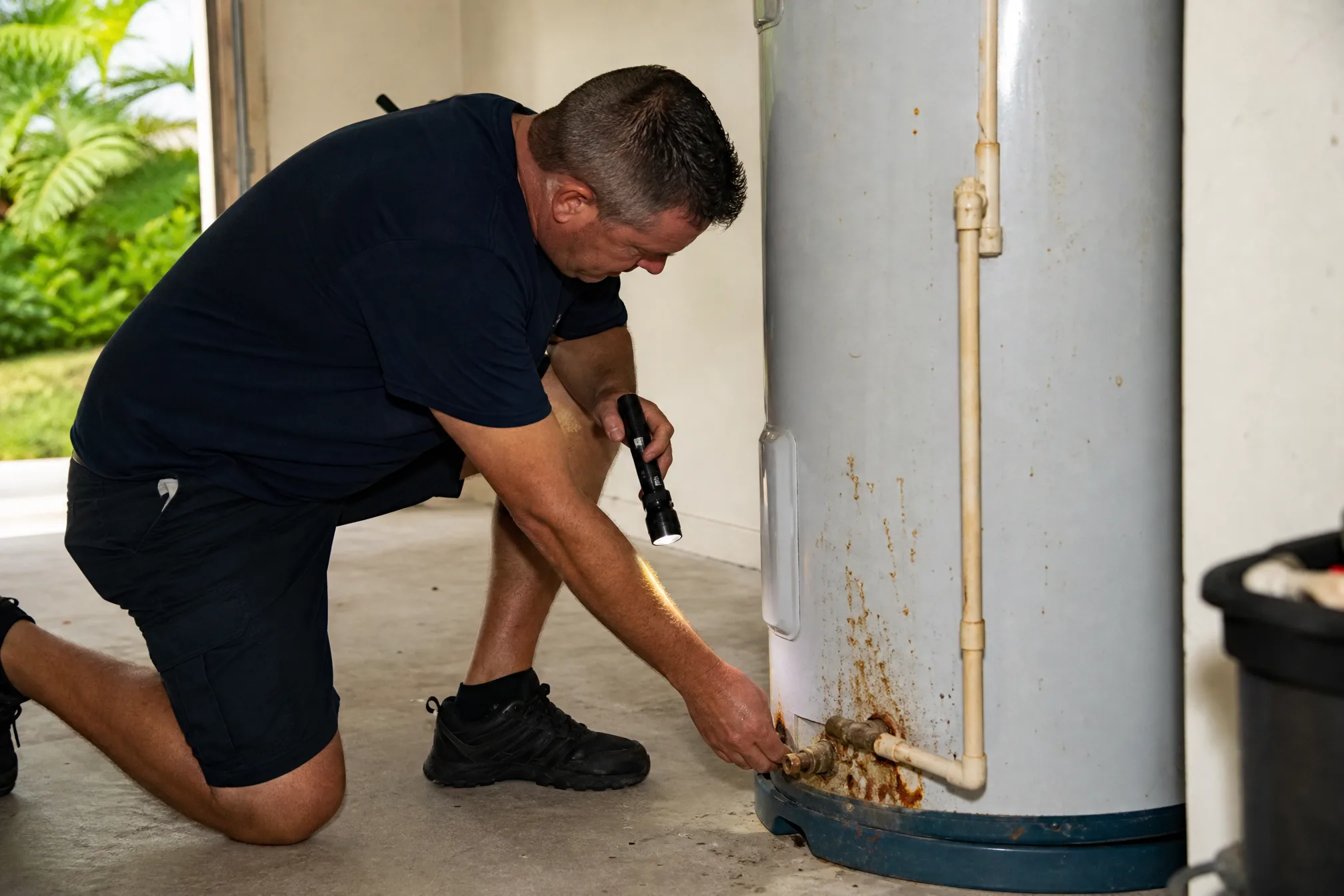
Unlike an AC system, which usually gives you warning signs over weeks or months, a water heater tank often fails without much notice — one day it is working, the next there is 40 gallons of water spreading across your garage or utility closet floor. Knowing the warning signs ahead of time is the difference between a planned replacement and a Saturday-morning emergency.
Realistic Lifespan Numbers
- Traditional tank water heater: 8-12 years typically, though hard water and lack of annual flushing can push failure toward the earlier end
- Tankless water heater: 15-20+ years with periodic descaling maintenance (see our tankless vs. tank guide for the full comparison)
If your traditional tank is past 8 years old, it is worth proactively checking for the warning signs below rather than waiting for a failure.
6 Signs Your Water Heater Is Near the End
1. Rust-Colored Water From the Hot Tap
This is the clearest sign of internal tank corrosion. Run only the hot water for a minute — if it comes out rust-tinted or with visible sediment, the tank's interior lining has broken down and corrosion is actively eating through metal.
2. Rust or Moisture at the Base of the Tank
Check around the bottom of the tank and the fittings. Any rust streaking or dampness, even small amounts, means a slow leak has likely started — and once a tank starts leaking from corrosion, it does not stop or self-seal.
3. Popping or Rumbling Sounds During Heating
Sediment builds up at the bottom of a tank over years, especially with Florida's mineral content. As the heating element fires through a layer of hardened sediment, it creates popping and rumbling sounds. This also reduces efficiency and heating capacity, and accelerates tank wear.
4. Inconsistent or Lukewarm Water
A failing heating element, thermostat, or (in gas units) a weakening thermocouple can all cause water that never quite reaches the temperature it used to, or that runs out faster than it used to.
5. The Tank Is Approaching or Past 8-10 Years Old
Even without visible symptoms, age alone is a legitimate reason to start planning a replacement. Check the manufacture date on the rating plate (the first two digits of the serial number are usually the year on most major brands) if you do not know your unit's age.
6. Rising Water Heating Costs With No Usage Change
Sediment buildup and a failing heating element both reduce efficiency, meaning the unit runs longer to deliver the same hot water — showing up as a gradual creep in your electric or gas bill.
If you see active leaking or rust-colored water combined with age past 8 years: do not wait for a full failure. A ruptured tank can release 40-50 gallons in minutes, causing real water damage to flooring, drywall, and anything stored nearby.
Repair vs. Replace
Components like thermostats, heating elements, and thermocouples are repairable and relatively inexpensive — usually $150 to $400. The tank itself is not repairable. If the tank is corroding or leaking, replacement is the only real option regardless of the unit's age, since a compromised tank wall will continue to weaken.
Annual tank flushing is one of the simplest maintenance tasks that meaningfully extends water heater life — it is included in every Comfort Club visit alongside your AC tune-up. See Comfort Club plans.
World Air HVAC diagnoses and replaces water heaters across Tamarac, Fort Lauderdale, Coral Springs, Pompano Beach, Hollywood, Plantation, Sunrise, Davie, Miramar, and Deerfield Beach — same-day service available for active leaks.
Water Heater Showing Warning Signs?
Free inspection and honest repair-vs-replace guidance.
