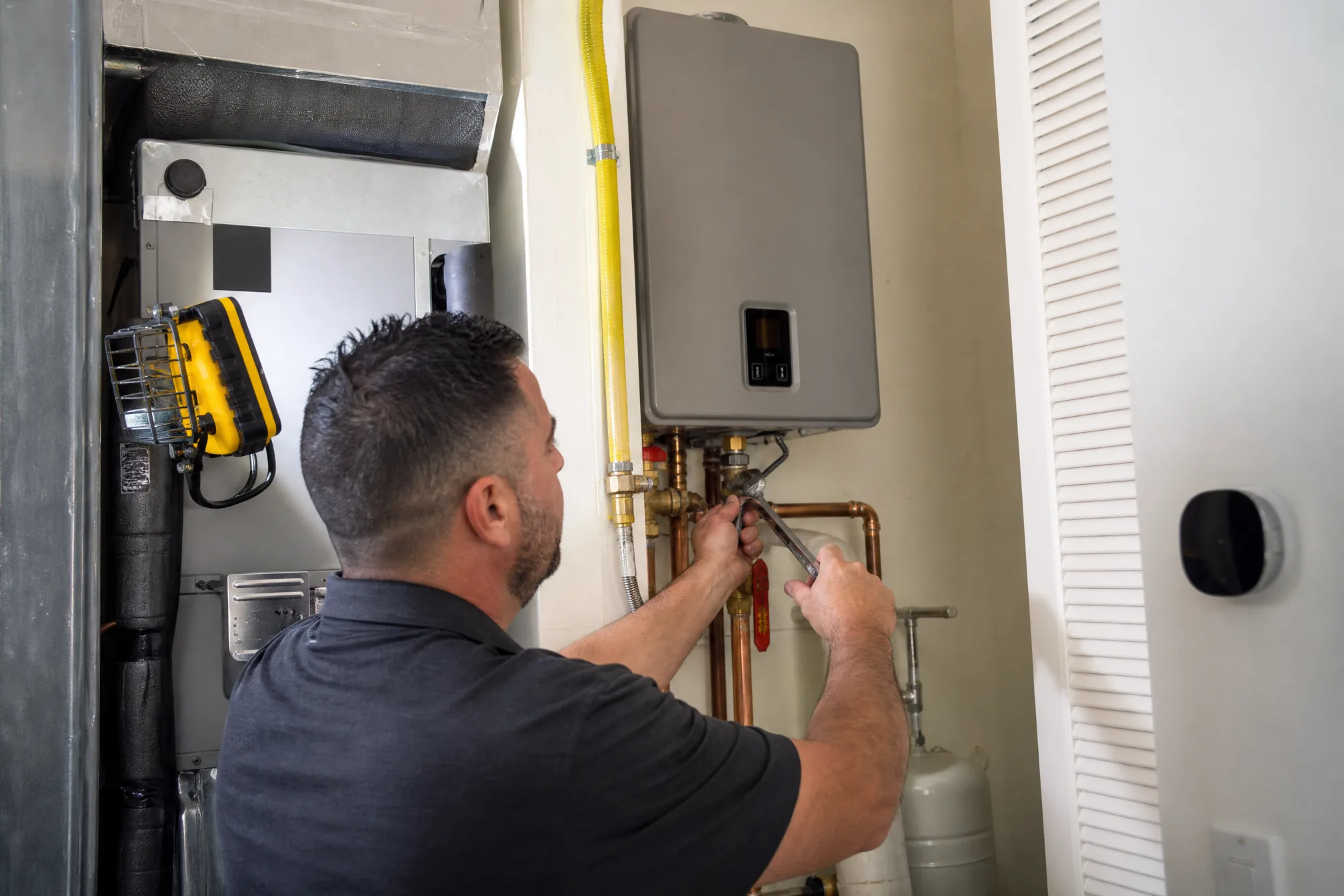
Every water heater replacement in Florida eventually comes down to the same question: stick with a traditional tank, or switch to tankless? The honest answer depends less on national buying guides and more on something specific to our state — Florida's incoming water is warm to begin with, which changes the math on tankless efficiency more than most homeowners realize.
How Florida's Climate Actually Changes This Decision
A tankless water heater's job is to raise incoming water to your target temperature on demand, instantly, as it flows through. The colder the incoming water, the harder — and less efficient — that job is. In northern states, groundwater arriving at the house can be 40-50°F in winter, forcing a tankless unit to work near its maximum capacity constantly. In South Florida, incoming water runs warmer year-round, so the same tankless unit reaches target temperature with meaningfully less energy and less strain, which is a big part of why tankless adoption has grown so much faster here than the national average.
Installed Cost Comparison
| Traditional Tank | Tankless | |
|---|---|---|
| Installed Cost | $1,400–$2,600 | $2,800–$4,500 |
| Typical Lifespan | 8–12 years | 15–20+ years |
| Hot Water Supply | Limited by tank size | Continuous, on demand |
| Space Required | Floor space, ~2x2 ft footprint | Wall-mounted, minimal footprint |
| Typical Efficiency Gain in FL | Baseline | 24–34% more efficient for typical households |
On pure upfront cost, tank wins. Spread over the tankless unit's roughly double lifespan, the total cost of ownership frequently favors tankless — you are comparing one $3,500 install lasting 18 years against two $2,000 installs (roughly $4,000) over the same period, before even factoring in the efficiency savings.
When a Traditional Tank Still Makes Sense
- Lower upfront budget — if the immediate cost difference matters more than long-term savings, tank is the straightforward choice
- Existing gas/electrical infrastructure already fits a tank — switching to tankless sometimes triggers electrical panel or gas line upgrades that add real cost
- Rental properties — where the owner is optimizing for lowest upfront cost rather than long-term efficiency
- Very high simultaneous hot water demand — a large household running multiple showers plus a dishwasher simultaneously may need a properly sized tankless unit (or two) to avoid temperature drop, which raises the tankless cost further
When Tankless Wins
- Long-term ownership — if you plan to stay in the home 10+ years, the lifespan and efficiency advantage compounds
- Limited space — condos, townhomes, and smaller utility closets benefit from the compact wall-mounted footprint
- Households that run out of hot water — tankless eliminates the "last person gets a cold shower" problem entirely
- Homeowners planning to claim efficiency rebates — qualifying tankless units are often eligible for the same FPL and federal incentive programs as high-efficiency AC systems — see our FPL rebate guide
Not sure which fits your household's actual hot water usage? We size every water heater quote around your real fixture count and peak-demand pattern, not a generic recommendation. Get a free estimate.
Maintenance Differences Worth Knowing
Traditional tanks need an annual flush to clear sediment buildup — skipping this is the single biggest reason tanks fail early, especially with Florida's mineral content. Tankless units need periodic descaling (typically every 1-2 years) to prevent mineral scale from restricting the heat exchanger, but have no tank to corrode, which is why their lifespan runs so much longer when maintained.
World Air HVAC installs and services both traditional and tankless water heaters across Tamarac, Fort Lauderdale, Coral Springs, Pompano Beach, Hollywood, Plantation, Sunrise, Davie, Miramar, and Deerfield Beach.
Not Sure Which Water Heater Fits Your Home?
Free in-home evaluation with real pricing for both options, no pressure either way.
